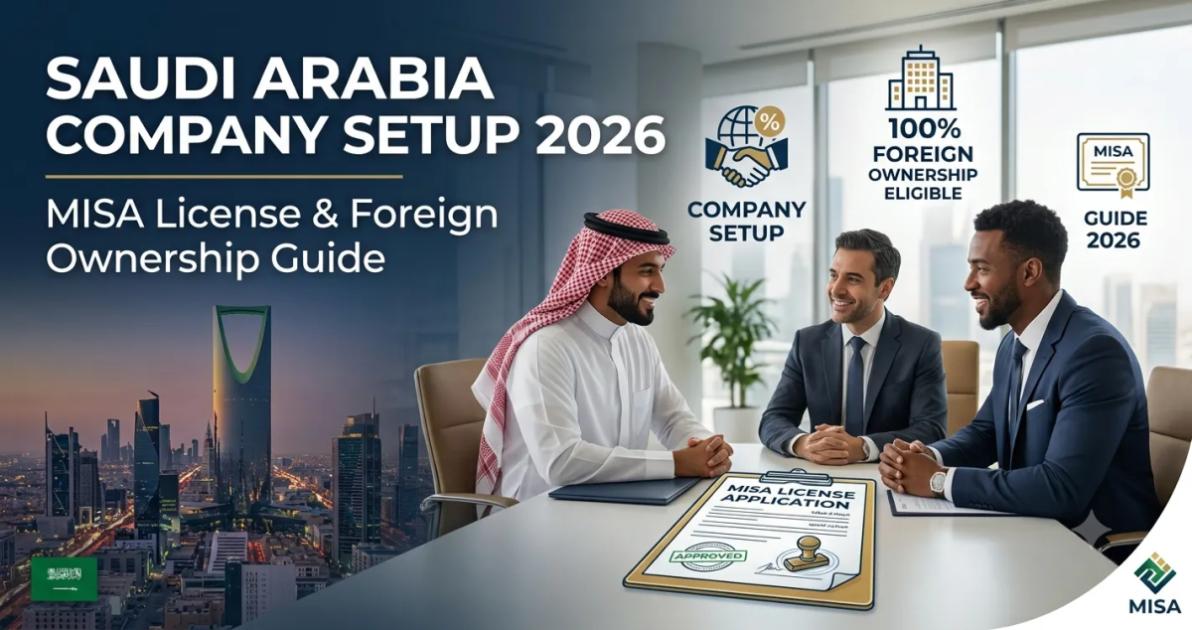
Setting up a company in Saudi Arabia in 2026 runs through two separate government bodies, and most guides blur them together in a way that creates real confusion. The Ministry of Investment (MISA) approves your right as a foreign investor to operate in the Kingdom. The Ministry of Commerce then issues your actual Commercial Registration (CR) — the legal identity of your company. You need both, in that order, and understanding which one does what saves real time during setup.
Quick Answer
Foreign investors need a MISA license before registering a company in Saudi Arabia — without it, you cannot trade, hire staff, or open a corporate bank account. Most business activities now allow 100% foreign ownership, a major shift from the pre-2016 era when a Saudi partner was standard. Processing typically takes 3–10 business days for straightforward applications once documentation is complete, though some sectors (industrial, trading, professional services) involve additional approvals that extend the timeline. There is no flat minimum capital requirement across all activities — it varies significantly by sector, from no minimum for many service businesses to SAR 30 million for trading licenses with full foreign ownership.
MISA License vs Commercial Registration: What Each One Actually Does
This distinction is the one piece of information that clears up almost everything else.
MISA License: The approval to invest as a foreigner. Issued by the Ministry of Investment, this is your entry permit — it confirms your business activity aligns with Saudi Arabia's economic goals and grants you the right to proceed.
Commercial Registration (CR): The legal identity of your company, issued by the Ministry of Commerce. This is your operational passport — you must hold a MISA license first before the CR can be issued.
Once both are in hand, you'll also register separately with the Chamber of Commerce, ZATCA (the tax authority), and GOSI (social insurance) before you're fully operational.
The Four Main MISA License Types
Service License
For consulting, IT, financial services, and most professional service businesses. Generally the most accessible category — no minimum capital requirement in most cases, with capital simply declared as part of your investment plan rather than deposited upfront.
Commercial (Trading) License
Covers wholesale, retail, distribution, and e-commerce trading. This is one of the most restricted categories — full foreign ownership in trading typically requires a minimum capital commitment of SAR 30 million, making it the most capital-intensive license type by a wide margin.
Industrial License
Mandatory for manufacturing and processing activities, jointly regulated by MISA and the Ministry of Industry and Mineral Resources. Foreign manufacturers can generally reach 100% ownership when operations add local value, create jobs, and align with Vision 2030 priorities — pharmaceuticals, food processing, chemicals, and components for giga-projects like NEOM are treated as priority sectors. Industrial licenses typically take longer than service licenses due to the additional regulatory layer.
Entrepreneurial License
Designed for innovative startups, this category de-emphasizes operating history in favor of your business concept and growth potential. Instead of years of financial statements, expect to submit a pitch deck, financial projections, and proof of backing or endorsement from a recognized incubator or accelerator.
Can You Really Get 100% Foreign Ownership?
In most sectors, yes — this is the single biggest change from the pre-Vision 2030 era, when joint ventures with majority Saudi ownership were the default. The shift stems from MISA's New Investment List, which systematically opened most sectors to full foreign capital starting around 2019–2020.
That said, don't assume full ownership automatically applies to your specific activity. A few categories still commonly involve a local partner in practice:
Professional services (law firms, accounting, engineering consultancies) often operate as foreign-Saudi joint ventures, with local investors holding at least 25% and relevant professional qualifications — though some engineering and consulting firms have secured 100% foreign ownership under specific conditions.
Trading activities allow 100% ownership but at the SAR 30 million capital threshold mentioned above — a deliberate filter favoring larger, established investors.
Regulated sectors like financial services and banking require additional approval from the Saudi Central Bank (SAMA) regardless of ownership percentage.
The most reliable way to confirm your specific activity's ownership rules is checking the exact ISIC4 (NACE) activity code against MISA's official activity list before you apply — guessing here is the single most common source of delayed or rejected applications.
Step-by-Step: The Registration Process
Choose your legal structure. Most foreign investors set up an LLC. A branch of a foreign company is another option, though it carries activity restrictions and needs additional approvals — branches require a minimum capital of SAR 25,000 regardless of the parent license's capital level.
Select your business activity using the correct ISIC4 code. This determines your license category and ownership eligibility — verify it against MISA's official list rather than assuming.
Prepare and attest your documents. This is typically the slowest part of the process. Required documents generally include: your parent company's commercial registration and Articles of Association, audited financial statements from the most recent fiscal year, passport copies of all shareholders and directors, and a Power of Attorney if a local representative is submitting on your behalf. All foreign documents must be notarized in your home country, legalized by the Saudi Embassy there, and officially translated into Arabic inside Saudi Arabia by an approved translator.
Reserve your trade name through the Ministry of Commerce's portal. Branches of foreign companies typically use a name matching the parent company; subsidiaries have more naming flexibility.
Submit your MISA application through the Invest Saudi portal with a clear business plan matching your declared activity.
Obtain sector-specific approvals if required — financial services need SAMA approval, healthcare needs Ministry of Health sign-off, media needs Ministry of Media clearance, and so on.
Receive your MISA license, then register for your Commercial Registration with the Ministry of Commerce.
Complete remaining registrations — Chamber of Commerce, ZATCA for tax, and GOSI for social insurance — before hiring staff or opening a bank account.
Real Timelines and Costs
Processing time varies considerably by sector and documentation quality:
Simple service-sector applications: as fast as 1–2 business days once documents are correctly submitted, though this is the best-case scenario rather than the average.
Standard applications across most sectors: 3–10 business days with complete documentation.
More complex projects requiring external approvals (industrial, healthcare, financial services): 2–6 weeks depending on how many additional regulators are involved.
There's no single minimum capital figure that applies across the board — it's entirely activity-dependent, ranging from no formal minimum for many service businesses up to SAR 30 million for full foreign ownership in trading. Audited financial statements showing profit above SAR 500,000 are commonly requested as part of the standard documentation, though the exact threshold can vary by license category.
What You Get Once Licensed
Investor residency: Business owners and senior employees of a MISA-licensed company can apply for Saudi residency tied to the business, reducing dependence on repeated business visit visas.
Sponsored visas: The ability to issue work visas and sponsor foreign employees and executives directly.
Property ownership: Licensed companies can own real estate for their business operations.
Government tender access: Eligibility to bid on public sector contracts through the Etimad portal.
Banking access: The ability to open a corporate bank account and conduct international transactions — something a foreign entity cannot do without the license.
Tax Position
Saudi Arabia imposes no personal income tax. On the corporate side, a 20% corporate tax applies to the foreign-owned share of profits, though MISA-licensed companies can access exemptions and incentives depending on sector and location — Special Economic Zones in particular offer notable advantages, and the Regional Headquarters (RHQ) license includes a 30-year 0% corporate tax holiday for multinationals basing their MENA operations in Riyadh.
The RHQ License: A Specific Note for Multinationals
If you're managing regional MENA operations rather than running a standalone Saudi business, the Regional Headquarters license is worth understanding separately. It requires the RHQ to be an independent legal entity, to begin mandatory activities within 6 months of licensing, carry out at least three optional activities within 12 months, employ at least three senior executives from the parent company, and hire a minimum of 15 full-time staff within the first year. MISA can revoke the license if these conditions aren't met — this isn't a passive holding structure, it requires genuine operational substance in Riyadh.
Frequently Asked Questions
Do I need a Saudi partner to start a business?
Not in most sectors — full foreign ownership is now standard across the majority of MISA's activity list. The main exceptions are some professional service categories (law, accounting, certain consulting), where a 25%+ local partner with relevant qualifications is still common in practice, and trading activities, where full ownership is allowed but requires a SAR 30 million capital commitment.
How long does the whole process actually take?
Budget 2–4 weeks for a standard setup from document preparation through to a usable Commercial Registration, with simple service-sector cases sometimes moving faster and industrial or regulated-sector cases taking longer due to additional approvals. Document attestation and Arabic translation is usually the slowest single step, so starting that early avoids the most common delay.
Is there a minimum capital requirement?
It depends entirely on your activity. Many service businesses have no formal minimum capital requirement. Trading licenses with full foreign ownership require SAR 30 million. Branches of foreign companies require a minimum of SAR 25,000 regardless of the parent license's capital level. Always check the specific requirement for your declared ISIC4 activity code rather than assuming a flat figure.
Can I add new business activities after getting my MISA license?
Yes, through the MISA portal, but it requires prior approval from MISA and may involve additional fees or new capital requirements depending on the activity you're adding. Some additions may require a new license application entirely rather than a simple amendment.
What happens if I choose the wrong activity code?
This is the most common cause of delayed or rejected applications. The ISIC4 (NACE) code you select determines your license category, your ownership eligibility, and your capital requirements — verifying the exact code against MISA's official activity list before submission, rather than estimating, is worth the extra time it takes.
Does holding a MISA license help with Saudi residency?
Yes. Business owners and senior employees of a MISA-licensed company can apply for residency linked directly to the business, which is generally more stable than relying on repeated business visit visas for ongoing presence in the Kingdom.
يمرّ تأسيس شركة في السعودية في 2026 عبر جهتين حكوميتين منفصلتين، وتخلط معظم الأدلة بينهما بطريقة تُسبب ارتباكاً حقيقياً. توافق وزارة الاستثمار (MISA) على حقك كمستثمر أجنبي بالعمل في المملكة. تُصدّر وزارة التجارة بعدها سجلك التجاري (CR) الفعلي — الهوية القانونية لشركتك. تحتاج كليهما، بهذا الترتيب، وفهم وظيفة كل منهما يوفر وقتاً حقيقياً خلال التأسيس.
الإجابة السريعة
يحتاج المستثمرون الأجانب لترخيص MISA قبل تسجيل شركة في السعودية — بدونه، لا يمكنك التداول أو توظيف موظفين أو فتح حساب بنكي للشركة. تسمح معظم الأنشطة التجارية الآن بملكية أجنبية 100%، تحول كبير عن عصر ما قبل 2016 حين كان الشريك السعودي معياراً. تستغرق المعالجة عادة 3-10 أيام عمل للطلبات المباشرة بعد اكتمال المستندات، لكن بعض القطاعات (الصناعي، التجاري، الخدمات المهنية) تتطلب موافقات إضافية تمدد الجدول الزمني. لا يوجد حد أدنى ثابت لرأس المال عبر كل الأنشطة — يختلف بشكل كبير حسب القطاع، من بلا حد أدنى لكثير من أعمال الخدمات إلى 30 مليون ريال للترخيص التجاري بملكية أجنبية كاملة.
ترخيص MISA مقابل السجل التجاري: وظيفة كل منهما فعلياً
هذا التمييز هو المعلومة الواحدة التي توضح كل شيء آخر تقريباً.
ترخيص MISA: الموافقة على الاستثمار كأجنبي. صادر عن وزارة الاستثمار، وهو تصريح دخولك — يؤكد أن نشاطك التجاري يتوافق مع أهداف السعودية الاقتصادية ويمنحك حق المتابعة.
السجل التجاري (CR): الهوية القانونية لشركتك، صادر عن وزارة التجارة. هذا جواز سفرك التشغيلي — يجب أن تحمل ترخيص MISA أولاً قبل إصدار السجل التجاري.
بمجرد حصولك على كلاهما، ستُسجّل أيضاً بشكل منفصل في الغرفة التجارية، وهيئة الزكاة والضريبة والجمارك (ZATCA)، والتأمينات الاجتماعية (GOSI) قبل أن تكون جاهزاً للعمل بالكامل.
الأنواع الأربعة الأساسية لترخيص MISA
الترخيص الخدمي
للاستشارات وتقنية المعلومات والخدمات المالية ومعظم أعمال الخدمات المهنية. عادة الفئة الأكثر سهولة في الوصول إليها — بلا حد أدنى لرأس المال في معظم الحالات، حيث يُعلن رأس المال فقط كجزء من خطة استثمارك بدلاً من إيداعه مسبقاً.
الترخيص التجاري (التداول)
يغطي تجارة الجملة والتجزئة والتوزيع والتجارة الإلكترونية. هذه من أكثر الفئات تقييداً — الملكية الأجنبية الكاملة في التجارة تتطلب عادة التزاماً رأسمالياً لا يقل عن 30 مليون ريال، مما يجعله أكثر أنواع الترخيص كثافة رأسمالية بفارق كبير.
الترخيص الصناعي
إلزامي لأنشطة التصنيع والمعالجة، يخضع لتنظيم مشترك بين MISA ووزارة الصناعة والثروة المعدنية. يمكن للمصنعين الأجانب الوصول عموماً لملكية 100% عندما تضيف العمليات قيمة محلية وتُنشئ وظائف وتتوافق مع أولويات رؤية 2030 — تُعامل الأدوية ومعالجة الأغذية والكيماويات ومكونات المشاريع العملاقة كـNEOM كقطاعات أولوية. تستغرق التراخيص الصناعية عادة وقتاً أطول من التراخيص الخدمية بسبب الطبقة التنظيمية الإضافية.
الترخيص الريادي
مصمم للشركات الناشئة المبتكرة، تقلل هذه الفئة من أهمية السجل التشغيلي لصالح فكرة عملك وإمكانية نموه. بدلاً من سنوات من البيانات المالية، توقع تقديم عرض تقديمي (pitch deck) وتوقعات مالية وإثبات دعم أو تأييد من حاضنة أو مسرّع أعمال معتمد.
هل يمكنك فعلاً الحصول على ملكية أجنبية 100%؟
في معظم القطاعات، نعم — هذا أكبر تغيير منفرد عن عصر ما قبل رؤية 2030، حين كانت المشاريع المشتركة بأغلبية ملكية سعودية هي المعيار الافتراضي. ينبع هذا التحول من قائمة الاستثمار الجديدة لـMISA، التي فتحت بشكل منهجي معظم القطاعات لرأس المال الأجنبي الكامل بدءاً من حوالي 2019-2020.
مع ذلك، لا تفترض أن الملكية الكاملة تنطبق تلقائياً على نشاطك المحدد. بعض الفئات لا تزال تتضمن عملياً شريكاً محلياً:
الخدمات المهنية (مكاتب المحاماة، المحاسبة، الاستشارات الهندسية) غالباً تعمل كمشاريع مشتركة سعودية-أجنبية، مع امتلاك المستثمرين المحليين لـ25% على الأقل ومؤهلات مهنية ذات صلة — لكن بعض شركات الهندسة والاستشارات حصلت على ملكية أجنبية 100% بشروط محددة.
الأنشطة التجارية تسمح بملكية 100% لكن عند عتبة 30 مليون ريال المذكورة أعلاه — مرشّح متعمد يُفضّل المستثمرين الأكبر والأكثر رسوخاً.
القطاعات المنظمة كالخدمات المالية والبنوك تتطلب موافقة إضافية من البنك المركزي السعودي (ساما) بغض النظر عن نسبة الملكية.
الطريقة الأكثر موثوقية لتأكيد قواعد الملكية لنشاطك المحدد هي فحص رمز النشاط ISIC4 (NACE) الدقيق مقابل قائمة الأنشطة الرسمية لـMISA قبل التقديم — التخمين هنا هو السبب الأكثر شيوعاً للطلبات المتأخرة أو المرفوضة.
خطوة بخطوة: عملية التسجيل
اختر هيكلك القانوني. يُؤسّس معظم المستثمرين الأجانب شركة ذات مسؤولية محدودة. فرع شركة أجنبية خيار آخر، لكنه يحمل قيوداً على الأنشطة ويحتاج موافقات إضافية — تتطلب الفروع حداً أدنى لرأس المال 25,000 ريال بغض النظر عن مستوى رأس مال الترخيص الأم.
اختر نشاطك التجاري باستخدام رمز ISIC4 الصحيح. هذا يحدد فئة ترخيصك وأهليتك للملكية — تحقق منه مقابل قائمة MISA الرسمية بدلاً من الافتراض.
جهّز ووثّق مستنداتك. هذا عادة الجزء الأبطأ في العملية. تشمل المستندات المطلوبة عموماً: السجل التجاري لشركتك الأم وعقد التأسيس، البيانات المالية المدققة لآخر سنة مالية، نسخ جوازات سفر كل المساهمين والمديرين، وتوكيل رسمي إذا كان ممثل محلي يُقدّم نيابة عنك. يجب توثيق كل المستندات الأجنبية في بلدك الأصلي، وتصديقها من السفارة السعودية هناك، وترجمتها رسمياً للعربية داخل السعودية عبر مترجم معتمد.
احجز اسمك التجاري عبر بوابة وزارة التجارة. تستخدم فروع الشركات الأجنبية عادة اسماً مطابقاً للشركة الأم؛ تمتلك الشركات التابعة مرونة أكبر في تسمية.
قدّم طلب MISA عبر بوابة Invest Saudi بخطة عمل واضحة تطابق نشاطك المُصرّح به.
احصل على الموافقات الخاصة بالقطاع إذا لزم — الخدمات المالية تحتاج موافقة ساما، الرعاية الصحية تحتاج موافقة وزارة الصحة، الإعلام يحتاج تصريح وزارة الإعلام، وما شابه.
استلم ترخيص MISA، ثم سجّل للحصول على سجلك التجاري من وزارة التجارة.
أكمل التسجيلات المتبقية — الغرفة التجارية، ZATCA للضرائب، وGOSI للتأمينات الاجتماعية — قبل توظيف موظفين أو فتح حساب بنكي.
الجداول الزمنية والتكاليف الحقيقية
تختلف مدة المعالجة بشكل كبير حسب القطاع وجودة المستندات:
الطلبات الخدمية البسيطة: بسرعة 1-2 يوم عمل بمجرد تقديم المستندات بشكل صحيح، لكن هذا أفضل سيناريو لا المتوسط.
الطلبات القياسية عبر معظم القطاعات: 3-10 أيام عمل مع مستندات كاملة.
المشاريع الأكثر تعقيداً التي تتطلب موافقات خارجية (الصناعي، الرعاية الصحية، الخدمات المالية): 2-6 أسابيع حسب عدد الجهات التنظيمية الإضافية المعنية.
لا يوجد رقم حد أدنى واحد لرأس المال ينطبق عبر كل الأنشطة — يعتمد كلياً على النشاط، من بلا حد أدنى رسمي لكثير من أعمال الخدمات إلى 30 مليون ريال للملكية الأجنبية الكاملة في التجارة. تُطلب عادة بيانات مالية مدققة تُظهر ربحاً يزيد عن 500,000 ريال كجزء من المستندات القياسية، لكن العتبة الدقيقة يمكن أن تختلف حسب فئة الترخيص.
ما تحصل عليه بعد الترخيص
إقامة المستثمر: يمكن لأصحاب الأعمال والموظفين كبار المستوى في شركة مرخّصة من MISA التقديم لإقامة مرتبطة مباشرة بالشركة، مما يقلل الاعتماد على تأشيرات الزيارة التجارية المتكررة.
التأشيرات المكفولة: القدرة على إصدار تأشيرات عمل وكفالة موظفين ومسؤولين تنفيذيين أجانب مباشرة.
ملكية العقارات: يمكن للشركات المرخّصة امتلاك عقارات لعملياتها التجارية.
الوصول للمناقصات الحكومية: أهلية تقديم عروض على عقود القطاع العام عبر بوابة اعتماد.
الوصول المصرفي: القدرة على فتح حساب بنكي للشركة وإجراء معاملات دولية — وهو ما لا يمكن لكيان أجنبي فعله بدون الترخيص.
الوضع الضريبي
لا تفرض السعودية ضريبة دخل شخصي. على الجانب المؤسسي، تُطبّق ضريبة شركات 20% على حصة الأرباح المملوكة أجنبياً، لكن الشركات المرخّصة من MISA يمكنها الوصول لإعفاءات وحوافز حسب القطاع والموقع — تقدم المناطق الاقتصادية الخاصة بالتحديد مزايا ملحوظة، ويتضمن ترخيص المقر الإقليمي (RHQ) إعفاءً ضريبياً مؤسسياً 0% لمدة 30 سنة للشركات متعددة الجنسيات التي تجعل الرياض قاعدة عملياتها في الشرق الأوسط وشمال أفريقيا.
ترخيص RHQ: ملاحظة محددة للشركات متعددة الجنسيات
إذا كنت تُدير عمليات إقليمية في الشرق الأوسط وشمال أفريقيا بدلاً من تشغيل عمل سعودي مستقل، يستحق ترخيص المقر الإقليمي فهماً منفصلاً. يتطلب أن يكون RHQ كياناً قانونياً مستقلاً، وبدء الأنشطة الإلزامية خلال 6 أشهر من الترخيص، وتنفيذ 3 أنشطة اختيارية على الأقل خلال 12 شهراً، وتوظيف 3 مسؤولين تنفيذيين كبار على الأقل من الشركة الأم، وتوظيف حد أدنى 15 موظفاً بدوام كامل خلال السنة الأولى. يمكن لـMISA إلغاء الترخيص إذا لم تُستوف هذه الشروط — هذا ليس هيكل حيازة سلبياً، يتطلب جوهراً تشغيلياً حقيقياً في الرياض.
الأسئلة الشائعة
هل أحتاج شريكاً سعودياً لبدء عمل تجاري؟
ليس في معظم القطاعات — الملكية الأجنبية الكاملة أصبحت الآن معياراً عبر أغلبية قائمة أنشطة MISA. الاستثناءات الأساسية هي بعض فئات الخدمات المهنية (المحاماة، المحاسبة، استشارات معينة)، حيث لا يزال شريك محلي بنسبة 25%+ بمؤهلات ذات صلة شائعاً عملياً، والأنشطة التجارية، حيث الملكية الكاملة مسموحة لكنها تتطلب التزاماً رأسمالياً 30 مليون ريال.
كم تستغرق العملية كاملة فعلياً؟
خصص 2-4 أسابيع للتأسيس القياسي من تحضير المستندات حتى سجل تجاري قابل للاستخدام، مع تحرك حالات القطاع الخدمي البسيطة أحياناً أسرع وحالات القطاع الصناعي أو المنظم تستغرق أطول بسبب الموافقات الإضافية. توثيق المستندات والترجمة العربية عادة أبطأ خطوة منفردة، فبدء ذلك مبكراً يتجنب التأخير الأكثر شيوعاً.
هل يوجد حد أدنى لرأس المال؟
يعتمد كلياً على نشاطك. كثير من أعمال الخدمات بلا حد أدنى رسمي لرأس المال. التراخيص التجارية بملكية أجنبية كاملة تتطلب 30 مليون ريال. فروع الشركات الأجنبية تتطلب حداً أدنى 25,000 ريال بغض النظر عن مستوى رأس مال الترخيص الأم. تحقق دائماً من المتطلب المحدد لرمز نشاطك ISIC4 بدلاً من افتراض رقم ثابت.
هل يمكنني إضافة أنشطة تجارية جديدة بعد الحصول على ترخيص MISA؟
نعم، عبر بوابة MISA، لكنه يتطلب موافقة مسبقة من MISA وقد يتضمن رسوماً إضافية أو متطلبات رأسمال جديدة حسب النشاط الذي تُضيفه. بعض الإضافات قد تتطلب طلب ترخيص جديد بالكامل بدلاً من تعديل بسيط.
ماذا يحدث إذا اخترت رمز نشاط خاطئاً؟
هذا السبب الأكثر شيوعاً للطلبات المتأخرة أو المرفوضة. رمز ISIC4 (NACE) الذي تختاره يحدد فئة ترخيصك وأهليتك للملكية ومتطلبات رأس مالك — التحقق من الرمز الدقيق مقابل قائمة الأنشطة الرسمية لـMISA قبل التقديم، بدلاً من التقدير، يستحق الوقت الإضافي الذي يستغرقه.
هل يساعد حمل ترخيص MISA في الإقامة السعودية؟
نعم. يمكن لأصحاب الأعمال والموظفين كبار المستوى في شركة مرخّصة من MISA التقديم لإقامة مرتبطة مباشرة بالشركة، وهي عموماً أكثر استقراراً من الاعتماد على تأشيرات الزيارة التجارية المتكررة للتواجد المستمر في المملكة.