Saudi Arabia and the UAE get compared constantly, and for good reason — both offer zero personal income tax, strong economic growth, and genuine career opportunities for expats. But they solve different problems for different people, and the right answer depends far more on your priorities than on which country is objectively "better."
Quick Answer
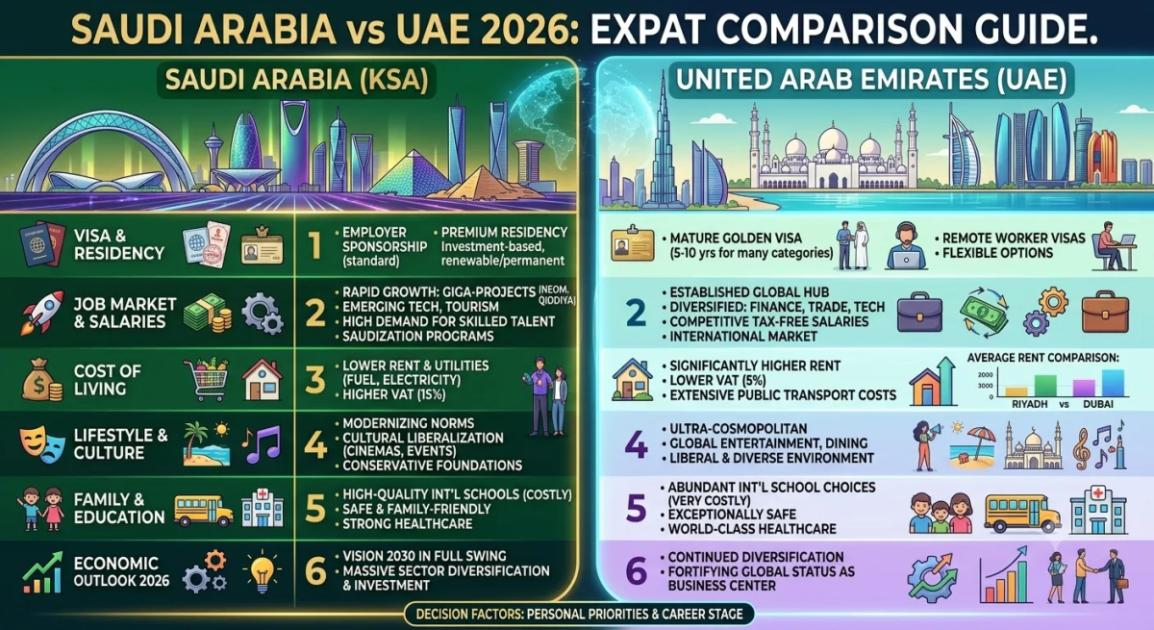
The UAE offers a more established, liberal, cosmopolitan lifestyle with a much larger and more mature expat infrastructure, but costs roughly 39% more on average than Saudi Arabia. Saudi Arabia offers significantly lower living costs, comparable or stronger savings potential, and rapidly improving lifestyle freedoms post-2020 reforms, but with a smaller expat social scene and more conservative social norms still in transition. Both charge 0% personal income tax on salaries. Saudi Arabia additionally requires a 9.75% GOSI contribution from expat employees, and VAT is higher (15% vs UAE's 5%).
Cost of Living: The Real Gap
According to Livingcost's March 2026 data, the average cost of living in Saudi Arabia ($1,272/month) runs about 39% less than the UAE ($2,071/month). Saudi Arabia ranks 57th among the world's most expensive countries; the UAE ranks 17th.
The gap is driven almost entirely by housing and lifestyle-tier spending rather than groceries or transport, which are broadly comparable.
Rent Comparison
Unit Type | Riyadh / Jeddah | Dubai |
|---|---|---|
1-bedroom, city center | SAR 2,500–3,500/month | AED 7,000–10,000/month |
Villa | SAR 6,000–12,000/month | AED 30,000+/month |
Saudi housing also tends to run larger for the price — bigger villas are available at lower cost than comparable UAE properties, though UAE housing generally offers more modern amenities and closer proximity to commercial business districts.
Salary and Take-Home Pay
Both countries charge 0% personal income tax on employment salaries — this is the headline similarity. But the details diverge in ways that matter for your actual take-home.
UAE expat salaries typically range from AED 15,000 to AED 45,000/month depending on industry and experience, with zero additional employee-side deductions.
Saudi expat salaries typically range from SAR 10,000 to SAR 35,000/month — generally lower at mid-tier levels, though increasingly competitive and often higher at senior executive tiers in sectors tied to giga-projects like NEOM, Red Sea Global, and Qiddiya, which offer premium uplift packages, housing compounds, and fully covered education allowances to attract top global talent.
Saudi Arabia adds a GOSI contribution of 9.75% of salary for expat employees — a mandatory social insurance deduction with no UAE equivalent.
Despite the GOSI deduction and generally lower mid-tier salaries, Saudi Arabia's significantly lower cost of living means actual savings potential is often comparable to, or higher than, the UAE for the same nominal income — particularly once Riyadh or Jeddah rent is weighed against Dubai rent.
VAT and Hidden Costs
Saudi Arabia's VAT sits at 15% — tripled from 5% during COVID-19 and made permanent — versus the UAE's 5%. This meaningfully offsets some of Saudi Arabia's cost-of-living advantage on everyday purchases, even though it doesn't touch your salary directly.
Saudi Arabia is also tightening Saudization (Nitaqat) quotas, mandating minimum percentages of Saudi national employees across sectors — something that's gradually reshaping expat hiring patterns and worth understanding if you're evaluating long-term career stability in a specific industry.
Lifestyle and Social Freedoms
This is where the two countries differ most, and where most comparison guides understate how much has changed in Saudi Arabia specifically.
The UAE has long offered a liberal, cosmopolitan environment — alcohol available in licensed venues, an established multicultural social scene, and decades of accumulated expat infrastructure (clubs, communities, established networks) that Saudi Arabia is still building.
Saudi Arabia has changed dramatically since the 2020 reforms: cinemas, concerts, and major entertainment festivals that didn't exist five years ago are now common in Riyadh and Jeddah, alongside a fast-growing specialty coffee and dining culture. Alcohol remains entirely prohibited — a hard line that hasn't moved and isn't expected to. Family and community values carry more day-to-day weight in Saudi Arabia, and expat social communities, while growing quickly in Riyadh especially, remain smaller and less established outside the largest cities compared to the UAE's mature network.
Why People Are Actually Moving to Each Country
Saudi Arabia's Pull
Saudi Arabia is currently experiencing strong net inflows of expats, particularly into Riyadh and project-linked hubs. The primary draw is the combination of tax-free salaries, genuine career acceleration in fast-scaling Vision 2030 projects, and a daily-life liberalization that has materially improved quality of life compared to even five years ago. Compared to Dubai and Doha, Saudi Arabia's expat inflows have been particularly strong recently, driven by the sheer scale of its investment projects and deliberate efforts to attract global talent through programs like Premium Residency.
The most common reason cited for leaving Saudi Arabia is the sharp rise in Riyadh housing costs specifically, where rent increases have outpaced salary growth for some workers — worth factoring into any long-term financial plan rather than budgeting off older rent figures.
The UAE's Pull
The UAE remains attractive for its established infrastructure, deeper and more liquid job market (particularly in finance, tech, and tourism), and a social and lifestyle environment that requires far less cultural adjustment for most Western and Asian expats. It's the more proven, lower-friction choice for anyone prioritizing an immediately comfortable expat experience over long-term upside.
Visa and Residency Differences
Both countries have moved toward more flexible, less employer-dependent residency options in recent years — the UAE's Golden Visa and Green Visa, and Saudi Arabia's Premium Residency program, both offer paths to long-term residence without a traditional sponsor for qualifying investors and professionals. Saudi Arabia legalized full foreign property ownership starting in 2026, a meaningful shift that's expected to reshape its real estate market and attract more long-term-minded expats over the coming years.
Frequently Asked Questions
Which country lets me save more money?
It depends on your salary tier and city. At comparable nominal salaries, Saudi Arabia's significantly lower cost of living (39% less on average) often allows for stronger savings despite the mandatory 9.75% GOSI deduction. At senior executive levels tied to giga-projects, Saudi packages can be substantially richer than UAE equivalents. The UAE tends to win on raw salary ceiling for mid-tier finance, tech, and tourism roles.
Is alcohol really completely banned in Saudi Arabia?
Yes, entirely — this is one of the clearest and most consistent differences between the two countries, and it hasn't shifted alongside Saudi Arabia's other lifestyle reforms. The UAE permits alcohol in licensed venues. If this matters significantly to your day-to-day lifestyle, it's worth weighing heavily in your decision.
Is Saudi Arabia safe for expats?
Yes — personal safety is one of the most frequently cited positives among expats already living there, alongside tax-free income and career growth. Day-to-day crime rates are low by international standards.
Which country has a bigger expat community?
The UAE, by a wide margin, with decades of accumulated international community infrastructure — clubs, schools, networking groups, and established social scenes. Saudi Arabia's expat community is growing quickly, especially in Riyadh, but remains considerably smaller and less developed outside the largest project hubs.
Does either country have a path to citizenship?
Neither country offers citizenship by investment. Both treat long-term residency programs (UAE Golden Visa, Saudi Premium Residency) as exactly that — long-term residency, not a pathway to a passport. Naturalization in either country is a separate, far longer, and far more discretionary process.
Which is better for raising a family?
This depends heavily on what you're optimizing for. The UAE offers more international school choice and a more familiar lifestyle for Western families with less cultural adjustment required. Saudi Arabia offers lower overall living costs and increasingly developed family-oriented entertainment and amenities, but a more conservative day-to-day social environment that some families adapt to more easily than others.
تتم مقارنة السعودية والإمارات باستمرار، ولسبب جيد — تقدم كلتاهما ضريبة دخل شخصي صفرية، ونمواً اقتصادياً قوياً، وفرصاً مهنية حقيقية للوافدين. لكنهما تحلّان مشاكل مختلفة لأشخاص مختلفين، والإجابة الصحيحة تعتمد على أولوياتك أكثر بكثير من أي دولة "أفضل" بشكل موضوعي.
الإجابة السريعة
تقدم الإمارات نمط حياة أكثر رسوخاً وتحرراً وعالمية ببنية وافدين أكبر وأكثر نضجاً بكثير، لكنها تكلف أكثر بحوالي 39% في المتوسط من السعودية. تقدم السعودية تكاليف معيشة أقل بشكل ملحوظ، وقدرة توفير مماثلة أو أقوى، وحريات نمط حياة تتحسن سريعاً بعد إصلاحات ما بعد 2020، لكن بمشهد اجتماعي للوافدين أصغر ومعايير اجتماعية أكثر تحفظاً لا تزال في طور التحول. تفرض كلتاهما 0% ضريبة دخل شخصي على الرواتب. تتطلب السعودية إضافياً مساهمة GOSI بنسبة 9.75% من الموظفين الوافدين، وضريبة القيمة المضافة أعلى (15% مقابل 5% في الإمارات).
تكلفة المعيشة: الفارق الحقيقي
وفقاً لبيانات Livingcost لمارس 2026، يبلغ متوسط تكلفة المعيشة في السعودية (1,272 دولار/شهر) أقل بحوالي 39% من الإمارات (2,071 دولار/شهر). تحتل السعودية المرتبة 57 بين أغلى دول العالم؛ تحتل الإمارات المرتبة 17.
الفارق مدفوع بشكل شبه كامل من الإسكان والإنفاق على مستويات نمط الحياة، أكثر من البقالة أو المواصلات، التي تتقارب بشكل عام.
مقارنة الإيجار
نوع الوحدة | الرياض / جدة | دبي |
|---|---|---|
غرفة نوم واحدة، وسط المدينة | 2,500–3,500 ريال/شهر | 7,000–10,000 درهم/شهر |
فيلا | 6,000–12,000 ريال/شهر | 30,000+ درهم/شهر |
يميل السكن السعودي أيضاً لكونه أكبر مقابل السعر — تتوفر فلل أكبر بتكلفة أقل من عقارات إماراتية مماثلة، لكن السكن الإماراتي عموماً يقدم وسائل راحة أكثر حداثة وقرباً أكبر من مناطق الأعمال التجارية.
الراتب وصافي الدخل
تفرض كلتا الدولتين 0% ضريبة دخل شخصي على الرواتب — هذا التشابه الأساسي بينهما. لكن التفاصيل تختلف بطرق تهم صافي دخلك الفعلي.
رواتب الوافدين في الإمارات تتراوح عادة بين 15,000 و45,000 درهم/شهر حسب المجال والخبرة، بلا أي استقطاعات إضافية من جانب الموظف.
رواتب الوافدين في السعودية تتراوح عادة بين 10,000 و35,000 ريال/شهر — أقل عموماً في المستويات المتوسطة، لكنها تنافسية بشكل متزايد وغالباً أعلى في المستويات التنفيذية العليا في القطاعات المرتبطة بالمشاريع العملاقة كـNEOM والبحر الأحمر العالمية والقدية، التي تقدم حزماً تفضيلية ومجمّعات سكنية وبدلات تعليم مغطاة بالكامل لجذب أفضل المواهب العالمية.
تضيف السعودية مساهمة GOSI بنسبة 9.75% من الراتب للموظفين الوافدين — استقطاع تأمين اجتماعي إلزامي لا يوجد له مقابل في الإمارات.
بالرغم من استقطاع GOSI والرواتب الأقل عموماً في المستوى المتوسط، فإن تكلفة المعيشة الأقل بشكل ملحوظ في السعودية تعني أن إمكانية التوفير الفعلية غالباً مماثلة أو أعلى من الإمارات لنفس الدخل الاسمي — خصوصاً عند موازنة إيجار الرياض أو جدة مقابل إيجار دبي.
ضريبة القيمة المضافة والتكاليف الخفية
تبلغ ضريبة القيمة المضافة في السعودية 15% — ارتفعت من 5% خلال كوفيد-19 وأصبحت دائمة — مقابل 5% في الإمارات. هذا يُعوّض بشكل ملموس بعض ميزة تكلفة المعيشة الأقل في السعودية على المشتريات اليومية، حتى لو لم يلامس راتبك مباشرة.
تُشدّد السعودية أيضاً حصص السعودة (نطاقات)، التي تفرض نسباً دنيا من الموظفين السعوديين عبر القطاعات — وهذا يُعيد تشكيل أنماط توظيف الوافدين تدريجياً، ويستحق فهمه إذا كنت تُقيّم استقراراً مهنياً طويل المدى في مجال محدد.
نمط الحياة والحريات الاجتماعية
هنا تختلف الدولتان أكثر، وهنا تُقلّل معظم أدلة المقارنة من حجم التغيير الذي حدث في السعودية بالتحديد.
تقدم الإمارات منذ فترة طويلة بيئة متحررة وعالمية — كحول متاح في منشآت مرخّصة، ومشهد اجتماعي متعدد الثقافات راسخ، وعقود من بنية الوافدين المتراكمة (نوادٍ، مجتمعات، شبكات راسخة) لا تزال السعودية تبنيها.
تغيّرت السعودية بشكل جذري منذ إصلاحات 2020: السينمات والحفلات الموسيقية والمهرجانات الترفيهية الكبرى التي لم تكن موجودة قبل خمس سنوات أصبحت شائعة الآن في الرياض وجدة، إلى جانب ثقافة قهوة متخصصة ومطاعم سريعة النمو. يبقى الكحول محظوراً تماماً — خط لم يتحرك ولا يُتوقع أن يتحرك. تحمل القيم العائلية والمجتمعية وزناً أكبر في الحياة اليومية بالسعودية، ومجتمعات الوافدين الاجتماعية، بينما تنمو بسرعة في الرياض بالتحديد، تبقى أصغر وأقل رسوخاً خارج أكبر المدن مقارنة بالشبكة الناضجة في الإمارات.
لماذا ينتقل الناس فعلياً لكل دولة
جاذبية السعودية
تشهد السعودية حالياً تدفقاً صافياً قوياً من الوافدين، خصوصاً نحو الرياض والمراكز المرتبطة بالمشاريع الكبرى. الجاذب الأساسي هو مزيج الرواتب المعفاة من الضرائب، والتسريع المهني الحقيقي في مشاريع رؤية 2030 سريعة النمو، وتحرر يومي حسّن نوعية الحياة بشكل ملموس مقارنة حتى بخمس سنوات مضت. مقارنة بدبي والدوحة، كانت تدفقات الوافدين للسعودية قوية بشكل خاص مؤخراً، مدفوعة بضخامة مشاريعها الاستثمارية وجهود متعمدة لجذب المواهب العالمية عبر برامج كالإقامة المميزة.
السبب الأكثر شيوعاً المذكور لترك السعودية هو الارتفاع الحاد في تكاليف السكن في الرياض بالتحديد، حيث تجاوزت زيادات الإيجار نمو الرواتب لبعض العاملين — يستحق أخذه في الحسبان في أي خطة مالية طويلة المدى بدلاً من التخطيط بأرقام إيجار قديمة.
جاذبية الإمارات
تبقى الإمارات جذابة لبنيتها التحتية الراسخة، وسوق عملها الأعمق والأكثر سيولة (خصوصاً في المالية والتقنية والسياحة)، وبيئة اجتماعية ونمط حياة تتطلب تكيفاً ثقافياً أقل بكثير لمعظم الوافدين الغربيين والآسيويين. هي الخيار الأكثر إثباتاً وأقل احتكاكاً لمن يُقدّم تجربة وافد مريحة فوراً على المكاسب طويلة المدى.
اختلافات التأشيرة والإقامة
تحركت كلتا الدولتين نحو خيارات إقامة أكثر مرونة وأقل اعتماداً على صاحب العمل في السنوات الأخيرة — الفيزا الذهبية والفيزا الخضراء في الإمارات، وبرنامج الإقامة المميزة في السعودية، يقدمان مسارات للإقامة طويلة المدى بدون كفيل تقليدي للمستثمرين والمهنيين المؤهلين. شرّعت السعودية الملكية الأجنبية الكاملة للعقارات بدءاً من 2026، تحول مهم يُتوقع أن يُعيد تشكيل سوقها العقاري ويجذب وافدين أكثر توجهاً للمدى الطويل خلال السنوات القادمة.
الأسئلة الشائعة
أي دولة تتيح لي توفير أموال أكثر؟
يعتمد على مستوى راتبك ومدينتك. عند رواتب اسمية مماثلة، تكلفة المعيشة الأقل بشكل ملحوظ في السعودية (أقل بـ39% في المتوسط) غالباً تسمح بتوفير أقوى بالرغم من استقطاع GOSI الإلزامي 9.75%. في المستويات التنفيذية العليا المرتبطة بالمشاريع العملاقة، يمكن أن تكون الحزم السعودية أغنى بشكل كبير من النظائر الإماراتية. تميل الإمارات للفوز في سقف الراتب الخام لأدوار المالية والتقنية والسياحة متوسطة المستوى.
هل الكحول محظور فعلياً بالكامل في السعودية؟
نعم، تماماً — هذا أحد أوضح وأكثر الاختلافات ثباتاً بين الدولتين، ولم يتغيّر مع إصلاحات نمط الحياة الأخرى في السعودية. تسمح الإمارات بالكحول في منشآت مرخّصة. إذا كان هذا مهماً بشكل كبير لنمط حياتك اليومي، يستحق وزناً كبيراً في قرارك.
هل السعودية آمنة للوافدين؟
نعم — الأمان الشخصي من أكثر الإيجابيات المذكورة بين الوافدين المقيمين هناك بالفعل، إلى جانب الدخل المعفى من الضرائب والنمو المهني. معدلات الجريمة اليومية منخفضة بالمعايير الدولية.
أي دولة لديها مجتمع وافدين أكبر؟
الإمارات، بفارق كبير، بعقود من بنية المجتمع الدولي المتراكمة — نوادٍ ومدارس ومجموعات تواصل ومشاهد اجتماعية راسخة. مجتمع الوافدين في السعودية ينمو بسرعة، خصوصاً في الرياض، لكنه يبقى أصغر بكثير وأقل تطوراً خارج أكبر مراكز المشاريع.
هل تقدم أي من الدولتين مساراً للجنسية؟
لا تقدم أي من الدولتين الجنسية بالاستثمار. تتعامل كلتاهما مع برامج الإقامة طويلة المدى (الفيزا الذهبية الإماراتية، الإقامة المميزة السعودية) كإقامة طويلة المدى فقط، لا مساراً لجواز سفر. التجنيس في كلتا الدولتين عملية منفصلة وأطول بكثير وأكثر خضوعاً للتقدير الحكومي.
أيهما أفضل لتربية عائلة؟
يعتمد هذا بشكل كبير على ما تُحسّن من أجله. تقدم الإمارات خيارات مدارس دولية أكثر ونمط حياة أكثر دراية للعائلات الغربية بتكيف ثقافي أقل مطلوب. تقدم السعودية تكاليف معيشة أقل بشكل عام وترفيهاً ووسائل راحة موجهة للعائلة تتطور بشكل متزايد، لكن ببيئة اجتماعية يومية أكثر تحفظاً يتكيف معها بعض العائلات بسهولة أكبر من غيرها.