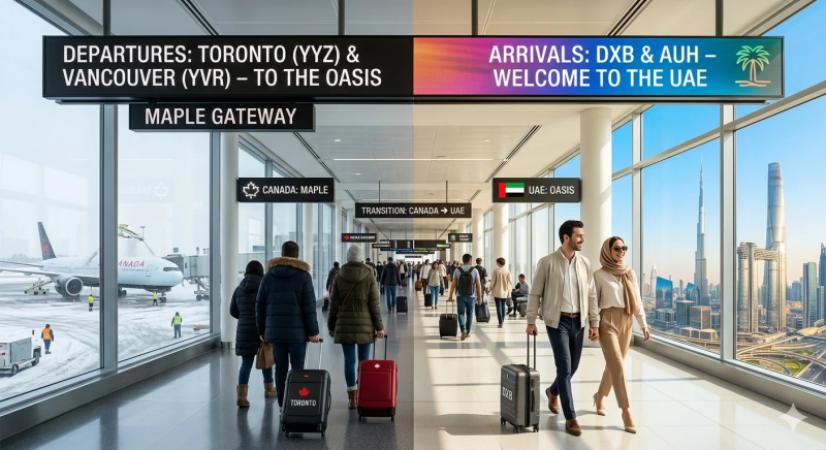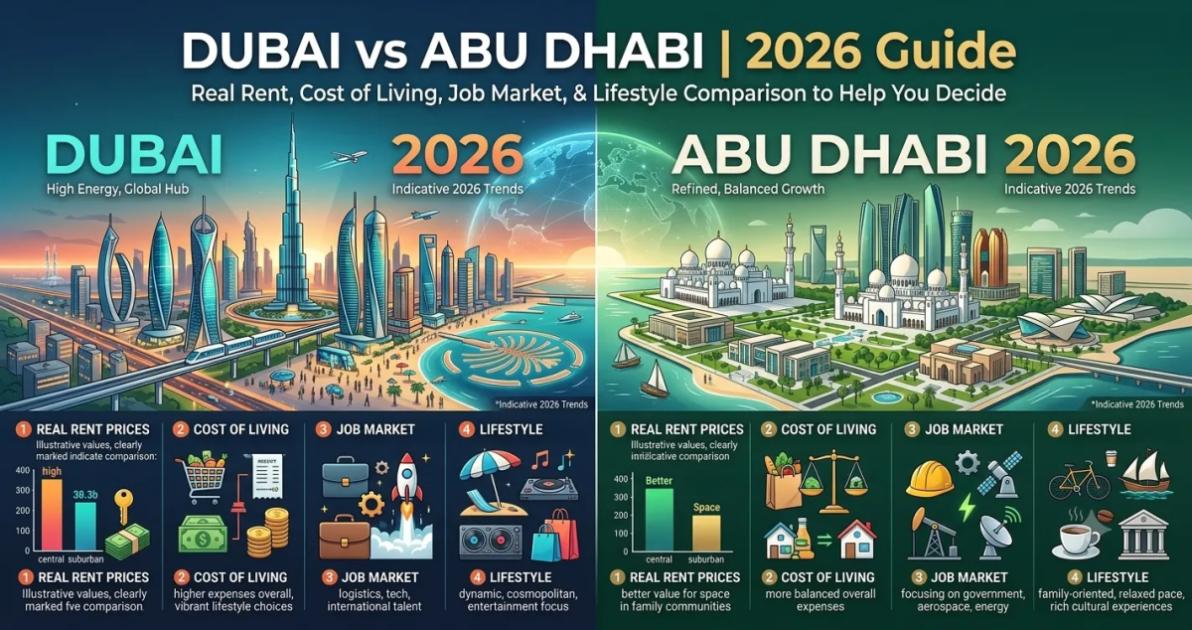
Dubai or Abu Dhabi is usually the first real decision anyone moving to the UAE has to make. Both cities share the same currency, the same federal visa system, and the same zero income tax — but that's roughly where the similarities end. The honest answer to which one is "better" depends entirely on your budget, your industry, and what pace of life you're actually looking for.
Quick Answer
Dubai costs roughly 13–20% more than Abu Dhabi across most spending categories, driven mainly by higher rent, but it also offers around 3x more job opportunities across finance, tech, tourism, and retail, plus salaries that run 10–15% higher for comparable roles. Abu Dhabi is calmer, more family-oriented, and stronger in government, energy, and healthcare employment. There's no universally "better" choice — Dubai suits career-driven, social, fast-paced lifestyles; Abu Dhabi suits people prioritizing savings, stability, and a quieter pace.
Cost of Living: The Real Numbers
According to Numbeo's 2026 comparison data, you'd need around AED 25,000 in Dubai to maintain the same standard of living that AED 21,335 buys in Abu Dhabi — meaning Dubai runs about 13% more expensive overall. Expatistan's independent index puts the gap at a similar 13%.
For a family including rent, monthly expenses average around $4,500 in Abu Dhabi versus more than $5,000 in Dubai. Abu Dhabi comes out cheaper across nearly every major category — housing, education, food, public transport, and taxis.
Rent: Where the Gap Actually Comes From
Rent is the single biggest driver of the cost difference between the two cities. Here's the real annual rent comparison across common unit types:
Unit Type | Dubai (AED/year) | Abu Dhabi (AED/year) |
|---|---|---|
Studio | 45,000–75,000 | 35,000–55,000 |
1 Bedroom | 65,000–95,000 | 50,000–75,000 |
2 Bedroom | 95,000–145,000 | 75,000–110,000 |
3 Bedroom Villa | 150,000–250,000 | 120,000–180,000 |
A 1-bedroom in a central Abu Dhabi area like Al Reem Island typically runs AED 55,000–75,000/year, while a comparable apartment in Dubai Marina or Downtown costs AED 85,000–155,000/year — a gap that widens considerably the more central and premium the location.
One practical difference worth knowing: Abu Dhabi typically allows 12 monthly cheque payments on Tawtheeq-registered contracts, while Dubai landlords commonly require 1–4 cheques upfront — a meaningful cash-flow difference if you're budgeting tightly in your first year.
Salary: Does Dubai's Premium Pay Off?
Dubai salaries typically run 10–15% higher than equivalent Abu Dhabi roles, but the cost difference largely offsets that premium rather than leaving you meaningfully ahead. A couple living comfortably in Abu Dhabi on AED 15,000/month would generally need AED 18,000–20,000/month to maintain the same lifestyle in Dubai.
In practice, this means the salary premium is close to a wash for most mid-level roles — the real decision comes down to job availability and industry fit rather than raw salary numbers.
Job Market: Where the Real Difference Lies
This is where the two cities diverge most sharply. Dubai is the UAE's commercial capital — a population of roughly 3.6 million, 85–90% expats, and around 3x more job opportunities concentrated in finance, tech, tourism, media, and retail.
Abu Dhabi, with around 1.8 million people and 80–85% expats, has a different employment profile entirely — dominated by government institutions, energy companies, and large corporations. If your field is government-adjacent, oil and gas, or large-enterprise corporate work, Abu Dhabi often has deeper, more stable opportunities. If you're in tech, finance, hospitality, or media, Dubai's market is significantly larger and more liquid.
Schools and Healthcare
Dubai has considerably more choice — over 200 private schools regulated by the KHDA, compared to roughly 120 in Abu Dhabi regulated by ADEK. Abu Dhabi has one notable advantage here: ADEK regulates school fee increases more strictly than Dubai's KHDA, and some Abu Dhabi schools receive government subsidies, which can mean more predictable year-on-year costs for families.
On healthcare, Abu Dhabi is home to Cleveland Clinic Abu Dhabi, a globally recognized facility, and the emirate's government-backed healthcare infrastructure is considered particularly strong. Dubai's private healthcare sector is larger and more varied, with a wider range of specialist clinics and price points.
Lifestyle and Pace
Dubai is the high-density, internationally social option — Downtown Dubai and Dubai Marina offer walkable living, an active nightlife, and proximity to major commercial hubs. Dubai's Metro covers two major lines across 53 stations, supplemented by buses, trams, and water taxis, giving it a clear public transport edge.
Abu Dhabi is calmer and more conservative by comparison, with a stronger sense of long-term community and less pronounced tourism seasonality — which tends to support more stable, predictable rental demand. It relies more heavily on cars and buses, though infrastructure continues to improve, and projects like Etihad Rail are gradually shortening the practical distance between the two cities.
Day-to-Day Costs That Add Up
Municipality fees: Abu Dhabi charges a lower municipality fee (3% vs Dubai's 5%), which adds up to real money annually on higher rents.
Tolls: Dubai's Salik system charges AED 4 per gate crossing and accumulates quickly for daily commuters. Abu Dhabi's newer Darb system generally results in lower monthly charges for residents staying within the city.
Telecom: Both cities use the same providers (du and Etisalat) at identical pricing — no difference here.
Groceries: Largely comparable between the two cities when shopping at major chains like Lulu and Carrefour.
Visa and Residency: Does It Matter Which City You Choose?
No — UAE residence visas are federal, not emirate-specific. Your visa, whether employer-sponsored or self-sponsored under a freelance or Golden Visa, is valid across all seven emirates regardless of which city you live or work in. The main practical difference is that your Emirates ID and medical fitness testing are typically processed in the emirate where your sponsoring company is registered.
For property-based Golden Visa eligibility, both cities qualify under the same AED 2 million minimum investment threshold — there's no advantage to one emirate over the other on this front.
So, Which Should You Actually Choose?
There's no universally correct answer, but the decision usually clarifies once you're honest about a few things:
Choose Dubai if: your industry is tech, finance, hospitality, media, or retail; you want maximum job market depth and mobility; you value an active social scene and nightlife; international school variety matters more to you than fee predictability.
Choose Abu Dhabi if: your field is government, energy, or large corporate; you want a calmer, more family-oriented pace; saving a meaningful share of your salary matters more than lifestyle intensity; you prefer steadier, more predictable costs year to year.
A genuinely practical approach many expats use: spend two weeks in each city before signing a year-long lease in either. The numbers above are real, but pace of life is something you feel rather than calculate.
Frequently Asked Questions
Is Abu Dhabi really cheaper than Dubai, or is that outdated advice?
It's current and confirmed by multiple independent sources in 2026 — Numbeo and Expatistan both put the gap at roughly 13%, while broader lifestyle comparisons (including rent, schooling, and daily expenses) put it closer to 15–25% depending on the specific neighborhoods compared.
Do I need a different visa to live in Abu Dhabi vs Dubai?
No. UAE residence visas are federal and valid across all seven emirates regardless of where you live or work. Your employer's registered emirate determines where your Emirates ID and medical testing are processed, not where you're allowed to reside.
Which city has better job opportunities?
Dubai offers roughly 3x more job opportunities overall, concentrated in finance, tech, tourism, media, and retail. Abu Dhabi's job market is smaller but often deeper and more stable in government, energy, and large corporate roles — the better market depends entirely on your specific field.
Is it worth commuting between the two cities instead of choosing one?
Some residents do this as infrastructure improves, particularly with projects like Etihad Rail shortening travel time, but it's a genuine daily commitment given the current distance. Most people choose to live in whichever city matches their employer's location rather than commuting long-term.
Which city is better for raising a family?
Abu Dhabi is generally considered the more family-oriented choice — calmer pace, more predictable school fee regulation under ADEK, and strong government-backed healthcare. Dubai offers significantly more international school choice, which matters if you have specific curriculum requirements not available in Abu Dhabi.
دبي أم أبوظبي هي عادة أول قرار حقيقي يواجهه أي شخص ينتقل إلى الإمارات. تتشارك المدينتان نفس العملة، ونفس نظام التأشيرات الفيدرالي، ونفس ضريبة الدخل الصفرية — لكن هنا تقريباً تنتهي أوجه التشابه. الإجابة الصادقة عن أيهما "أفضل" تعتمد كلياً على ميزانيتك ومجال عملك ونمط الحياة الذي تبحث عنه فعلياً.
الإجابة السريعة
تكلف دبي أكثر من أبوظبي بنسبة 13–20% تقريباً عبر معظم فئات الإنفاق، مدفوعة أساساً بإيجار أعلى، لكنها تقدم أيضاً حوالي 3 أضعاف فرص العمل في المالية والتقنية والسياحة والتجزئة، بالإضافة إلى رواتب أعلى بـ10–15% للأدوار المماثلة. أبوظبي أكثر هدوءاً وتوجهاً للعائلات، وأقوى في وظائف الحكومة والطاقة والرعاية الصحية. لا يوجد خيار "أفضل" بشكل عام — تناسب دبي أنماط الحياة الموجهة للمهنة والاجتماعية وسريعة الإيقاع؛ تناسب أبوظبي من يُقدّمون التوفير والاستقرار ووتيرة أهدأ.
تكلفة المعيشة: الأرقام الحقيقية
وفقاً لبيانات مقارنة Numbeo لعام 2026، ستحتاج حوالي 25,000 درهم في دبي للحفاظ على نفس مستوى المعيشة الذي يوفره 21,335 درهم في أبوظبي — أي أن دبي أغلى بحوالي 13% بشكل عام. يضع مؤشر Expatistan المستقل الفرق عند نسبة مماثلة 13%.
لعائلة شاملة الإيجار، تبلغ متوسط النفقات الشهرية حوالي 4,500 دولار في أبوظبي مقابل أكثر من 5,000 دولار في دبي. تأتي أبوظبي أرخص عبر معظم الفئات الأساسية — السكن والتعليم والطعام والمواصلات العامة وسيارات الأجرة.
الإيجار: من أين يأتي الفارق فعلياً
الإيجار هو المحرك الأكبر منفرداً لفارق التكلفة بين المدينتين. هذه مقارنة الإيجار السنوي الحقيقية عبر أنواع الوحدات الشائعة:
نوع الوحدة | دبي (درهم/سنة) | أبوظبي (درهم/سنة) |
|---|---|---|
استوديو | 45,000–75,000 | 35,000–55,000 |
غرفة نوم واحدة | 65,000–95,000 | 50,000–75,000 |
غرفتا نوم | 95,000–145,000 | 75,000–110,000 |
فيلا 3 غرف نوم | 150,000–250,000 | 120,000–180,000 |
غرفة نوم واحدة في منطقة وسطية في أبوظبي مثل جزيرة الريم تكلف عادة 55,000–75,000 درهم/سنة، بينما شقة مماثلة في دبي مارينا أو وسط المدينة تكلف 85,000–155,000 درهم/سنة — فارق يتسع بشكل ملحوظ كلما كانت المنطقة أكثر وسطية وفخامة.
فرق عملي يستحق المعرفة: تسمح أبوظبي عادة بدفع 12 شيكاً شهرياً للعقود المسجلة عبر "تطبيق تطوير"، بينما يطلب ملاك دبي عادة 1–4 شيكات مقدّمة — فارق حقيقي في السيولة النقدية إذا كانت ميزانيتك محدودة في سنتك الأولى.
الراتب: هل تستحق علاوة دبي العناء؟
تكون رواتب دبي عادة أعلى بـ10–15% من أدوار أبوظبي المماثلة، لكن فارق التكلفة يُعوّض هذه العلاوة بشكل كبير بدلاً من أن يتركك متقدماً بشكل ملموس. زوجان يعيشان بشكل مريح في أبوظبي على 15,000 درهم شهرياً سيحتاجان عادة 18,000–20,000 درهم شهرياً للحفاظ على نمط الحياة نفسه في دبي.
عملياً، يعني هذا أن علاوة الراتب تكاد تتعادل مع فارق التكلفة لمعظم الأدوار متوسطة المستوى — القرار الحقيقي يعتمد على توافر الوظائف وملاءمة المجال أكثر من أرقام الراتب الخام.
سوق العمل: حيث يقع الفارق الحقيقي
هنا تتباعد المدينتان بشكل أكثر وضوحاً. دبي هي العاصمة التجارية للإمارات — بسكان حوالي 3.6 مليون، 85–90% منهم وافدون، وحوالي 3 أضعاف فرص العمل المُركّزة في المالية والتقنية والسياحة والإعلام والتجزئة.
أبوظبي، بسكان حوالي 1.8 مليون و80–85% وافدين، لها ملف توظيف مختلف تماماً — تسيطر عليه المؤسسات الحكومية وشركات الطاقة والمؤسسات الكبرى. إذا كان مجالك متصلاً بالحكومة أو النفط والغاز أو العمل المؤسسي الكبير، غالباً تقدم أبوظبي فرصاً أعمق وأكثر استقراراً. إذا كنت في التقنية أو المالية أو الضيافة أو الإعلام، سوق دبي أكبر بكثير وأكثر سيولة.
المدارس والرعاية الصحية
تمتلك دبي خيارات أكثر بكثير — أكثر من 200 مدرسة خاصة تُنظّمها هيئة المعرفة والتنمية البشرية (KHDA)، مقارنة بحوالي 120 في أبوظبي تُنظّمها هيئة أبوظبي للتعليم والمعرفة (ADEK). تتمتع أبوظبي بميزة ملحوظة هنا: تُنظّم ADEK زيادات الرسوم الدراسية بصرامة أكبر من KHDA في دبي، وتحصل بعض مدارس أبوظبي على دعم حكومي، مما يعني تكاليف أكثر قابلية للتوقع عاماً بعد عام للعائلات.
بخصوص الرعاية الصحية، تضم أبوظبي مستشفى كليفلاند كلينك أبوظبي، منشأة معترف بها عالمياً، وتُعتبر بنية الرعاية الصحية المدعومة حكومياً في الإمارة قوية بشكل خاص. قطاع الرعاية الصحية الخاص في دبي أكبر وأكثر تنوعاً، بنطاق أوسع من العيادات المتخصصة ومستويات الأسعار.
نمط الحياة والوتيرة
دبي هي الخيار عالي الكثافة والاجتماعي دولياً — يوفر وسط دبي ودبي مارينا حياة قابلة للمشي وحياة ليلية نشطة وقرباً من المراكز التجارية الكبرى. يغطي مترو دبي خطين رئيسيين عبر 53 محطة، مدعومين بالحافلات والترام وتاكسي المياه، مما يمنحها تفوقاً واضحاً في المواصلات العامة.
أبوظبي أكثر هدوءاً وتحفظاً بالمقارنة، مع إحساس أقوى بالمجتمع طويل المدى وموسمية سياحية أقل وضوحاً — مما يدعم طلباً إيجارياً أكثر استقراراً وقابلية للتوقع. تعتمد بشكل أكبر على السيارات والحافلات، لكن البنية التحتية تستمر بالتحسن، ومشاريع مثل قطار الاتحاد تُقصّر تدريجياً المسافة العملية بين المدينتين.
تكاليف يومية تتراكم
رسوم البلدية: تفرض أبوظبي رسم بلدية أقل (3% مقابل 5% في دبي)، وهذا يتراكم لمبلغ حقيقي سنوياً على الإيجارات الأعلى.
الرسوم المرورية: يفرض نظام سالك في دبي 4 دراهم لكل عبور بوابة ويتراكم بسرعة للمتنقلين يومياً. نظام درب الأحدث في أبوظبي يؤدي عموماً لرسوم شهرية أقل للسكان المتنقلين داخل المدينة.
الاتصالات: تستخدم المدينتان نفس المزودين (دو واتصالات) بنفس التسعير تماماً — لا فرق هنا.
البقالة: متقاربة إلى حد كبير بين المدينتين عند التسوق من السلاسل الكبرى مثل لولو وكارفور.
التأشيرة والإقامة: هل يهم اختيار المدينة؟
لا — تأشيرات الإقامة الإماراتية فيدرالية، لا خاصة بكل إمارة. تأشيرتك، سواء برعاية صاحب عمل أو ذاتية الرعاية عبر فيزا فريلانس أو ذهبية، صالحة عبر السبع إمارات بغض النظر عن مدينة عيشك أو عملك. الفرق العملي الأساسي هو أن هويتك الإماراتية وفحصك الطبي يُعالجان عادة في الإمارة التي تُسجّل فيها شركتك الراعية.
لأهلية الفيزا الذهبية القائمة على العقار، تتأهل كلا المدينتين بنفس عتبة الاستثمار الأدنى 2 مليون درهم — لا توجد ميزة لإمارة على أخرى في هذا الجانب.
إذن، ماذا تختار فعلياً؟
لا توجد إجابة صحيحة بشكل عام، لكن القرار عادة يتضح بمجرد الصدق مع نفسك حول بعض الأمور:
اختر دبي إذا: كان مجالك التقنية أو المالية أو الضيافة أو الإعلام أو التجزئة؛ تريد أعمق سوق عمل وحرية تنقل وظيفي؛ تُقدّر مشهداً اجتماعياً نشطاً وحياة ليلية؛ تنوع المدارس الدولية يهمك أكثر من قابلية توقع الرسوم.
اختر أبوظبي إذا: كان مجالك الحكومة أو الطاقة أو العمل المؤسسي الكبير؛ تريد وتيرة أهدأ وأكثر توجهاً للعائلة؛ توفير حصة ملموسة من راتبك يهمك أكثر من كثافة نمط الحياة؛ تُفضّل تكاليف أكثر استقراراً وقابلية للتوقع عاماً بعد عام.
نهج عملي حقيقي يستخدمه كثير من الوافدين: قضاء أسبوعين في كل مدينة قبل توقيع عقد إيجار لسنة كاملة في أي منهما. الأرقام أعلاه حقيقية، لكن وتيرة الحياة شيء تشعر به لا تحسبه.
الأسئلة الشائعة
هل أبوظبي أرخص فعلياً من دبي، أم أن هذه نصيحة قديمة؟
هي حالية ومؤكدة من مصادر مستقلة متعددة في 2026 — يضع كلا من Numbeo وExpatistan الفارق عند 13% تقريباً، بينما تضع مقارنات نمط الحياة الأوسع (شاملة الإيجار والتعليم والنفقات اليومية) الفارق أقرب لـ15–25% حسب الأحياء المحددة المُقارنة.
هل أحتاج تأشيرة مختلفة للعيش في أبوظبي مقابل دبي؟
لا. تأشيرات الإقامة الإماراتية فيدرالية وصالحة عبر السبع إمارات بغض النظر عن مكان عيشك أو عملك. الإمارة المُسجّلة فيها شركتك تحدد مكان معالجة هويتك الإماراتية وفحصك الطبي، لا مكان إقامتك المسموح.
أي مدينة لديها فرص عمل أفضل؟
تقدم دبي حوالي 3 أضعاف فرص العمل إجمالاً، مُركّزة في المالية والتقنية والسياحة والإعلام والتجزئة. سوق عمل أبوظبي أصغر لكنه غالباً أعمق وأكثر استقراراً في أدوار الحكومة والطاقة والشركات الكبرى — السوق الأفضل يعتمد كلياً على مجالك المحدد.
هل يستحق التنقل بين المدينتين بدلاً من اختيار واحدة؟
يفعل بعض السكان ذلك مع تحسن البنية التحتية، خصوصاً مع مشاريع كقطار الاتحاد التي تُقصّر وقت السفر، لكنه التزام يومي حقيقي بالنظر للمسافة الحالية. يختار معظم الناس العيش في المدينة التي تتوافق مع موقع صاحب عملهم بدلاً من التنقل طويل المدى.
أي مدينة أفضل لتربية عائلة؟
تُعتبر أبوظبي عموماً الخيار الأكثر توجهاً للعائلة — وتيرة أهدأ، تنظيم رسوم مدرسية أكثر قابلية للتوقع عبر ADEK، ورعاية صحية قوية مدعومة حكومياً. تقدم دبي خيارات مدارس دولية أكثر بكثير، وهذا مهم إذا كانت لديك متطلبات منهج محددة غير متوفرة في أبوظبي.